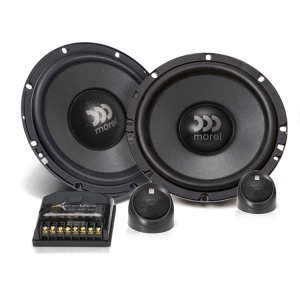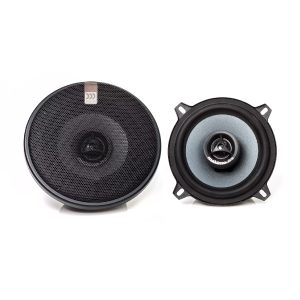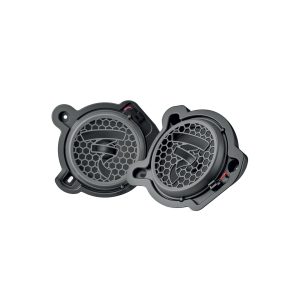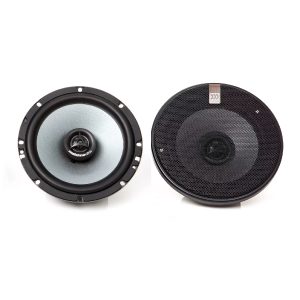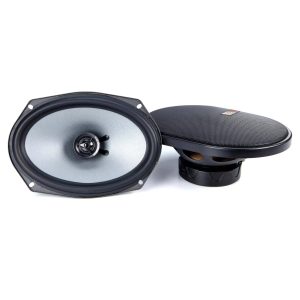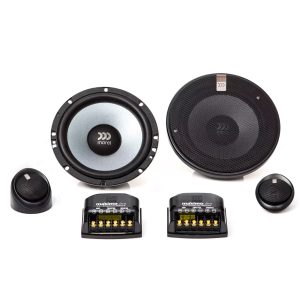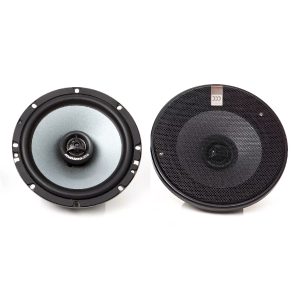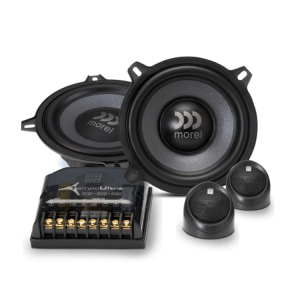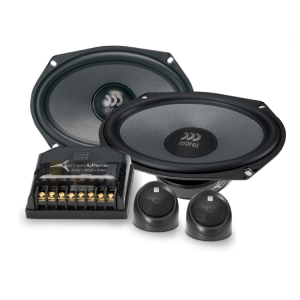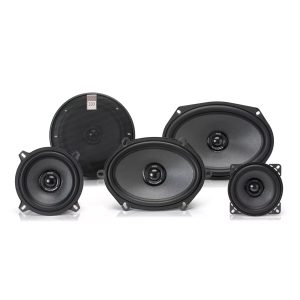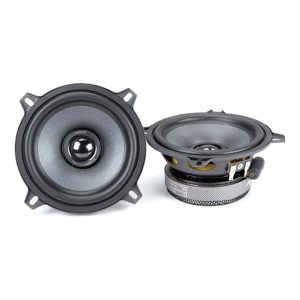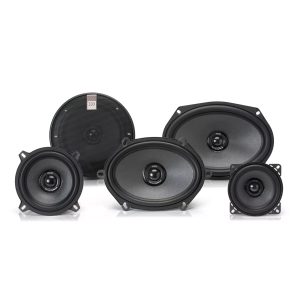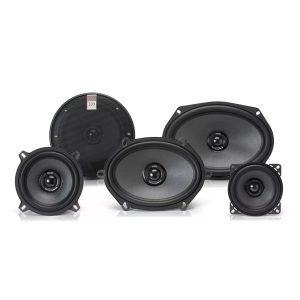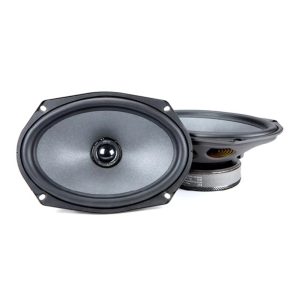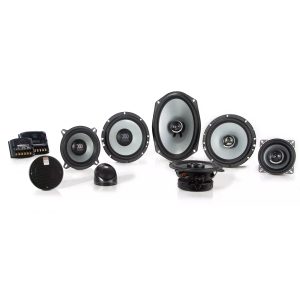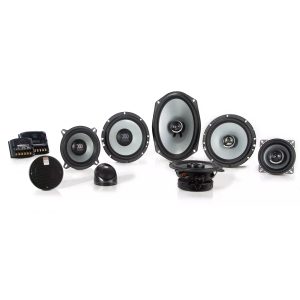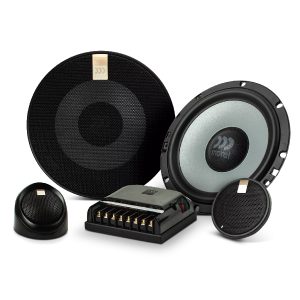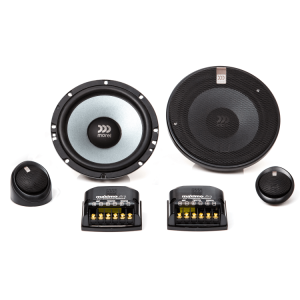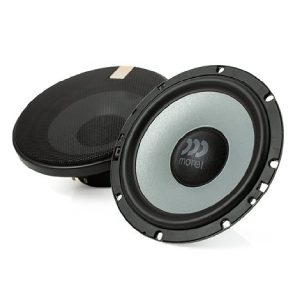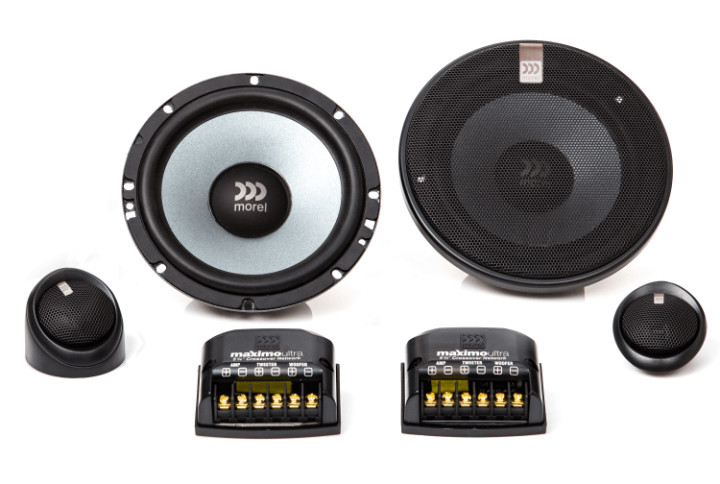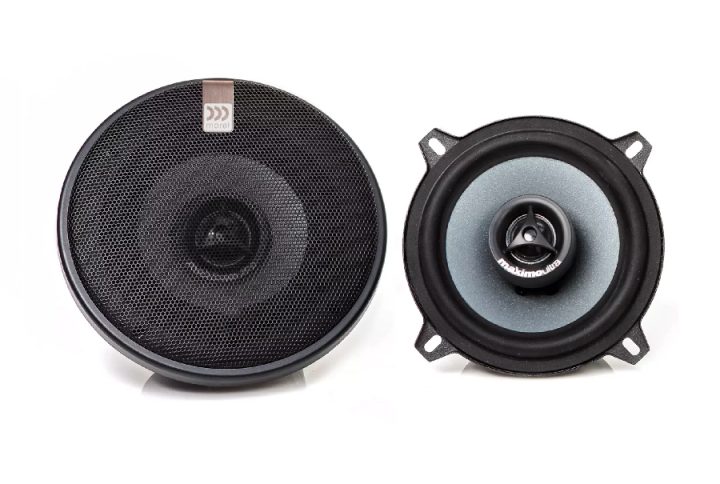
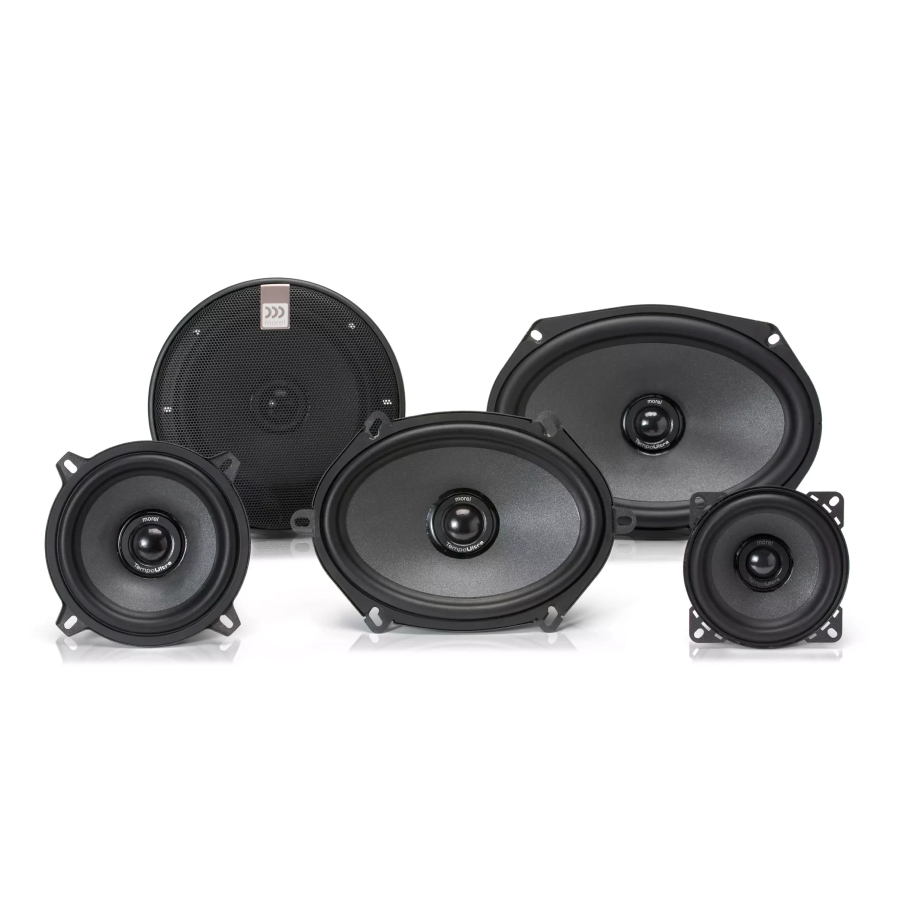
The Tempo Ultra MKII lineup includes both 2-way component systems and Integra point-source designs, providing flexible solutions for a variety of installation needs.
The Tempo Ultra Integra MKII utilizes a point-source speaker configuration in which the woofer and tweeter share a single chassis. Unlike a traditional coaxial design, the tweeter is recessed and concentrically positioned within the woofer cone.
This configuration helps reduce phase inconsistencies and supports consistent sound dispersion in all directions, resulting in near-ideal time alignment.
Equipped with handcrafted soft-dome tweeters and woofers featuring oversized voice coils and durable magnet systems, the Tempo Ultra Integra MKII delivers excellent power handling—up to 40% higher than comparable systems—while maintaining low distortion. This design produces deep, impactful bass, allowing for a full-range listening experience without the need for a subwoofer. Paired with the soft-dome tweeters, listeners can enjoy Morel’s recognized tonal balance, detailed reproduction, and natural vocal clarity for an engaging musical experience.
Available in 5”, 6”, 5×7”, and 6×9” sizes for efficient fitment in many factory speaker locations.
MXR CROSSOVER
The Morel Crossover Resolution (MXR) system incorporates high-quality components and carefully selected features to enhance sound presentation and overall system performance. The MXR crossover is engineered to allow seamless integration between drivers while minimizing signal loss, preserving the natural tonal balance of the speakers.
PAPER CONE
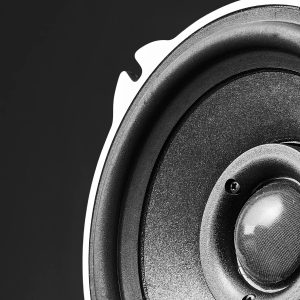
Used since the earliest loudspeaker designs, paper remains a proven and effective cone material. Morel’s advanced paper composite cones are extremely lightweight, making them well-suited for drivers utilizing smaller motors and voice coils.
INTEGRA
Derived from the word “integrate,” Integra refers to a speaker design where the woofer and tweeter share a common chassis. Unlike a coaxial speaker, the recessed tweeter is concentrically aligned within the woofer cone. This design helps reduce phase error and supports uniform sound dispersion, resulting in near-perfect time alignment.